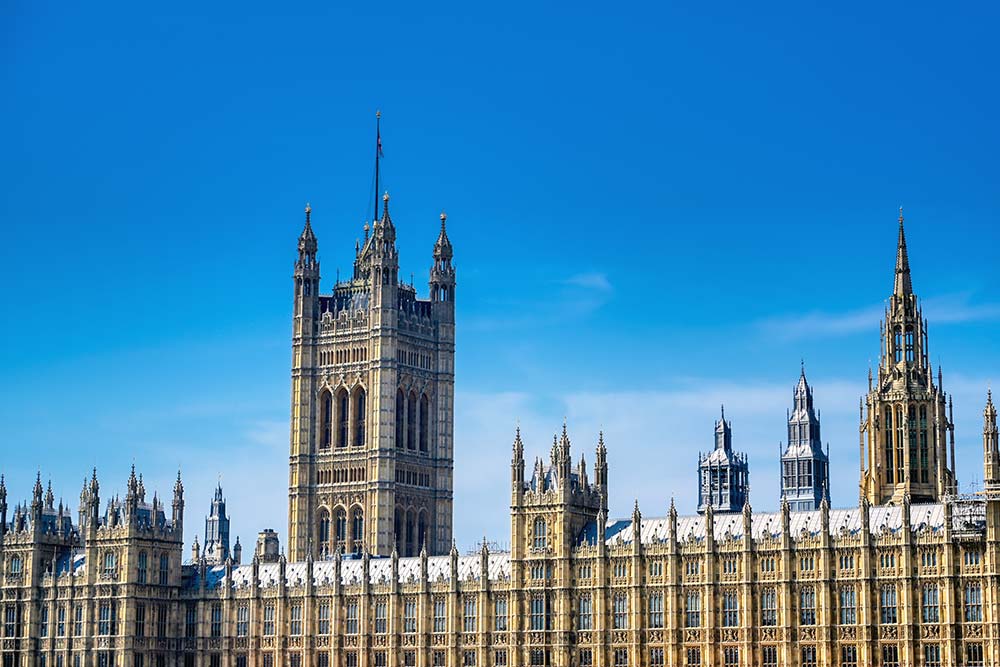
The distinction between a ‘public Act’ and a ‘private Act’ is fundamental to the legislative framework of the United Kingdom. Statutes provide definitions for these terms. The Parliament Acts 1911 and 1949 also serve to reinforce this legislative division. An analysis of this area of law is required. This analysis must explain the characteristics of each type of Act. The statutory provisions that clarify their status will be examined. Finally, the underlying intent of the House of Commons for preserving this distinction will be analysed. The primary objective is to understand why two separate legislative categories are maintained.
The Nature of a Public Act
A Public Act is a statute that affects the general public. Its provisions apply to the population at large, or to a significant section thereof. Public Acts are the most common form of legislation passed by Parliament and represent the implementation of government policy or matters of general public concern. The legislative process for a Public Bill involves debate and scrutiny in both the House of Commons and the House of Lords on matters of political policy.
An example of a Public Act from the 20th century is required. The *National Health Service Act 1946* is such an example. This Act established a comprehensive health service for the whole population, and its effects were therefore general and nationwide.
An example of a Public Act from the 21st century is required. The *Equality Act 2010* is a more recent example. This Act consolidated and strengthened discrimination law, and its provisions apply broadly across society, affecting employers, service providers, and individuals throughout the United Kingdom.
The Nature of a Private Act
A Private Act is distinct from a Public Act. Its purpose is to alter the law with respect to a specific person, body corporate, or a particular local area. It confers special powers or exemptions from the general law that are for the benefit of a specific applicant. The process for a Private Bill is different from that for a Public Bill. It is not initiated by the government but is promoted by an external body, such as a local authority or a private company, through a petition to Parliament. The scrutiny process is quasi-judicial, allowing affected parties to present their case for or against the Bill before a parliamentary committee.
An example of a Private Act from the 20th century is required. The *University College London Act 1996* is an example. This Act was passed to make new provisions for the governance and administration of a single educational institution.
An example of a Private Act from the 21st century is required. The *Middle Level Act 2018* is a further example. This Act conferred new powers on the Middle Level Commissioners, a body responsible for land drainage in a specific geographical area of Cambridgeshire.
Statutory Clarification of the Distinction
The clarification of the meanings of these terms is provided by statute. The most important statute for this purpose is the *Interpretation Act 1978*. This Act provides default definitions and rules for the construction of legislation.
Section 3 of the *Interpretation Act 1978* must be stated. It provides that “Every Act is a public Act to be judicially noticed as such, unless the contrary is expressly provided by the Act.” This provision establishes a clear legal presumption. Unless Parliament explicitly designates an Act as private, it is to be treated as a public Act. The effect of this is to create a default status for all legislation.
The meaning of the phrase ‘judicially noticed’ must be explained. For a statute to be judicially noticed means that a court of law accepts its existence and validity without it having to be formally proven as evidence in proceedings (Loveland, 2021). This statutory presumption, therefore, ensures procedural efficiency in the courts.
The Role of the Parliament Acts
The distinction between Public and Private Acts is reinforced by the Parliament Acts 1911 and 1949. These Acts are of major constitutional significance. Their purpose is to regulate the relationship between the House of Commons and the House of Lords, particularly in circumstances of legislative disagreement. They provide a mechanism for Public Bills to become law even if they are rejected by the House of Lords.
It must be stated that the provisions of the Parliament Acts apply exclusively to Public Bills. Private Bills are expressly excluded from their scope. This exclusion is a critical feature of the legislative system. It means that the power of the House of Commons to override the House of Lords does not extend to private legislation. A Private Bill requires the consent of both Houses to be enacted.
An example of a Public Act passed under the Parliament Acts is required. The *Hunting Act 2004*, which banned fox hunting, was passed using the Parliament Acts procedure after it was repeatedly rejected by the House of Lords. This demonstrates the constitutional power of the elected Commons over the unelected Lords in matters of general public policy.
The Underlying Intent of the House of Commons
The reasons for the House of Commons maintaining this strict distinction between Public and Private Acts must be analysed. The underlying intent relates to several principles of good governance and constitutional procedure.
A primary objective is to ensure appropriate procedural scrutiny. The Commons intends that matters of national policy (Public Bills) are subject to political debate about their general merits. By contrast, the intent for Private Bills is to provide a quasi-judicial forum where the specific rights and interests of affected individuals can be heard and protected (Bradley, Ewing and Knight, 2018). This different procedural track acknowledges that private legislation directly impacts specific legal rights in a way that most public legislation does not.
A second objective concerns constitutional balance. The exclusion of Private Bills from the Parliament Acts is intentional. It prevents a government with a majority in the House of Commons from unilaterally pushing through legislation that grants powers or benefits to a specific entity or locality against the judgement of the second chamber. This preserves the role of the House of Lords as a chamber for detailed revision and a check on the executive, particularly in cases that do not concern the government’s general political mandate (Barber, 2011). This can be seen as upholding the rule of law by preventing the arbitrary use of legislative power for private ends.
A third objective is legal certainty and clarity. The presumption created by the *Interpretation Act 1978* provides a clear and unambiguous rule for the judiciary and legal professionals. The intent is to avoid disputes over the status of a statute. By ensuring that any Act is public unless it expressly states otherwise, the Commons provides a default position that promotes consistency in the application of the law.
In conclusion, the meanings of ‘public Act’ and ‘private Act’ are clarified by both statutory definition and procedural rules. The *Interpretation Act 1978* establishes a clear presumption that an Act is public. The Parliament Acts reinforce the special status of public legislation by providing a mechanism for the will of the House of Commons to prevail on matters of national policy. The underlying intent of the House of Commons is not merely technical. The distinction is maintained to ensure that different types of legislation receive the appropriate form of scrutiny, to maintain a constitutional balance between the two Houses of Parliament, and to provide certainty in the law. The separation of Acts into these two categories is, therefore, a considered feature of the UK’s legislative constitution.
References
- Barber, N. (2011) The Constitutional State. Oxford University Press.
- Bradley, A., Ewing, K. and Knight, C. (2018) Constitutional and Administrative Law. 17th edn. Pearson.
- Loveland, I. (2021) Constitutional Law, Administrative Law, and Human Rights: A Critical Introduction. 9th edn. Oxford University Press.
- Interpretation Act 1978. c. 30.
- Parliament Act 1911. c. 13.
- Parliament Act 1949. c. 103.