

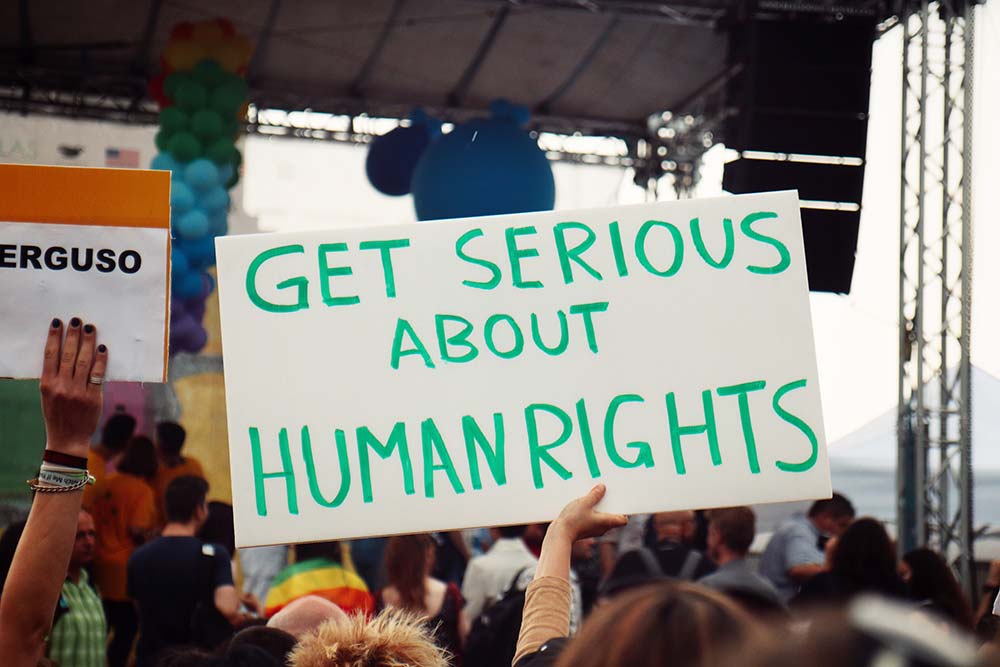
The debate over capital punishment, or the death penalty, is one of the most enduring and contentious ethical issues in the modern world. It involves profound questions about justice, human rights, and the power of the state. While many countries, including the United Kingdom, have abolished this practice, it remains in use in several nations. Proponents argue it is a just punishment for the most heinous crimes and a vital deterrent. However, this essay will argue that capital punishment should be abolished worldwide. The fundamental right to life, the unacceptable and irreversible risk of executing an innocent person, and the significant evidence that it does not work as a unique deterrent, all combine to make a compelling case for global abolition.
The Arguments for Retaining Capital Punishment
To understand the case for abolition, it is first necessary to consider the arguments made in favour of the death penalty. The primary justification is often based on the principle of retribution. This is the idea that a punishment should fit the crime, encapsulated in the ancient concept of ‘an eye for an eye’. For those who have lost loved ones to violent crime, the death penalty can feel like the only true form of justice, providing a sense of closure and finality by ensuring the offender pays the ultimate price for their actions. This retributive argument is deeply rooted in a moral and emotional sense of justice, suggesting that some crimes are so terrible that they forfeit the perpetrator’s right to life.
A second key argument is deterrence. Proponents claim that the existence of the death penalty discourages potential murderers and other violent criminals from committing capital offences. The logic is that the fear of execution is a more powerful deterrent than the prospect of life imprisonment. In this view, capital punishment is not just about punishing the individual but also about protecting society by preventing future crimes. A final, related point is that of incapacitation. Executing a convicted murderer guarantees that they can never harm another person again, whether inside prison or by escaping. These arguments present capital punishment as a necessary tool for maintaining order and delivering justice.
The Overwhelming Case for Abolition
Despite the arguments for its retention, the case for the worldwide abolition of capital punishment is significantly stronger, resting on fundamental principles of human rights, justice, and evidence-based policy.
The Inherent Right to Life
The most fundamental argument against the death penalty is its violation of the right to life. The Universal Declaration of Human Rights, a foundational document for international law, states in Article 3 that “Everyone has the right to life, liberty and security of person” (United Nations, 1948). Abolitionists argue that this right is absolute and that no state should have the authority to deliberately extinguish a human life, no matter the crime the person has committed. To grant the state this power is to place it on the same level as the killer, engaging in a calculated and premeditated killing. As Amnesty International, a leading organisation campaigning for abolition, argues, the death penalty is “the ultimate cruel, inhuman and degrading punishment” (Amnesty International, 2024). It is a relic of a less civilised past and has no place in a modern society that respects human dignity.
The Irreversible Risk of Error
Perhaps the most powerful practical argument against capital punishment is its finality. Justice systems, being run by humans, are fallible and can make mistakes. There have been numerous documented cases around the world of individuals being sentenced to death and later proven innocent, sometimes through DNA evidence. Where a lesser sentence like life imprisonment is given, a person wrongly convicted can be released and compensated. However, an execution is irreversible. Once an innocent person has been killed by the state, the error can never be undone.
The history of capital punishment in the United Kingdom provides a stark warning. The case of Timothy Evans, who was executed in 1950 for the murder of his wife and child, is a prominent example. It later transpired that his neighbour, the serial killer John Christie, was almost certainly the real murderer, and Evans was granted a posthumous pardon in 1966. Cases like this, along with that of Derek Bentley, played a significant role in shifting public and political opinion in the UK, leading to the eventual abolition of the death penalty for murder in 1965. The risk of executing even one innocent person is too high a price to pay for a system of punishment that has viable alternatives.
The Myth of Deterrence
The claim that the death penalty is a superior deterrent to other punishments is not supported by credible evidence. Numerous studies have compared murder rates in countries and states that have the death penalty with those that do not. The overwhelming conclusion from decades of research is that there is no conclusive proof that capital punishment deters violent crime more effectively than long-term imprisonment (Hood and Hoyle, 2015). For instance, many countries that have abolished the death penalty have seen their murder rates remain stable or even decrease. Conversely, some regions that actively use the death penalty have high rates of violent crime. This suggests that factors such as poverty, education, and effective policing have a much greater impact on crime rates than the existence of the death penalty. Therefore, the argument that it is a necessary tool for societal protection is fundamentally flawed.
The Global Trend and Conclusion
The international community is steadily moving towards the abolition of capital punishment. According to Amnesty International, 112 countries have abolished the death penalty for all crimes, and a total of 144 have abolished it in law or practice (Amnesty International, 2024). This represents a clear global consensus that the practice is outdated and inhumane. The UK’s final legal abolition, confirmed by the Human Rights Act 1998 which incorporated the 13th Protocol of the European Convention on Human Rights into domestic law, solidified its position as an abolitionist state. This trend reflects a growing recognition that capital punishment is incompatible with modern human rights standards.
In conclusion, I agree entirely with the statement that capital punishment should be abolished worldwide. While the desire for retribution from victims of horrific crimes is understandable, a system of justice must be based on higher principles than revenge. The arguments in favour of the death penalty, primarily retribution and deterrence, are outweighed by the powerful arguments against it. It is a violation of the most basic human right to life, it carries the appalling and irreversible risk of executing innocent people, and it has not been proven to be an effective deterrent. The global trend towards abolition is a sign of progress, reflecting a collective move towards a more just, humane, and civilised world. For these reasons, the campaign for the complete and worldwide abolition of capital punishment must continue.
References
- Amnesty International (2024) Death Penalty. Amnesty International.
- Hood, R. and Hoyle, C. (2015) The Death Penalty: A Worldwide Perspective. 5th edn. Oxford University Press.
- United Nations (1948) The Universal Declaration of Human Rights.



