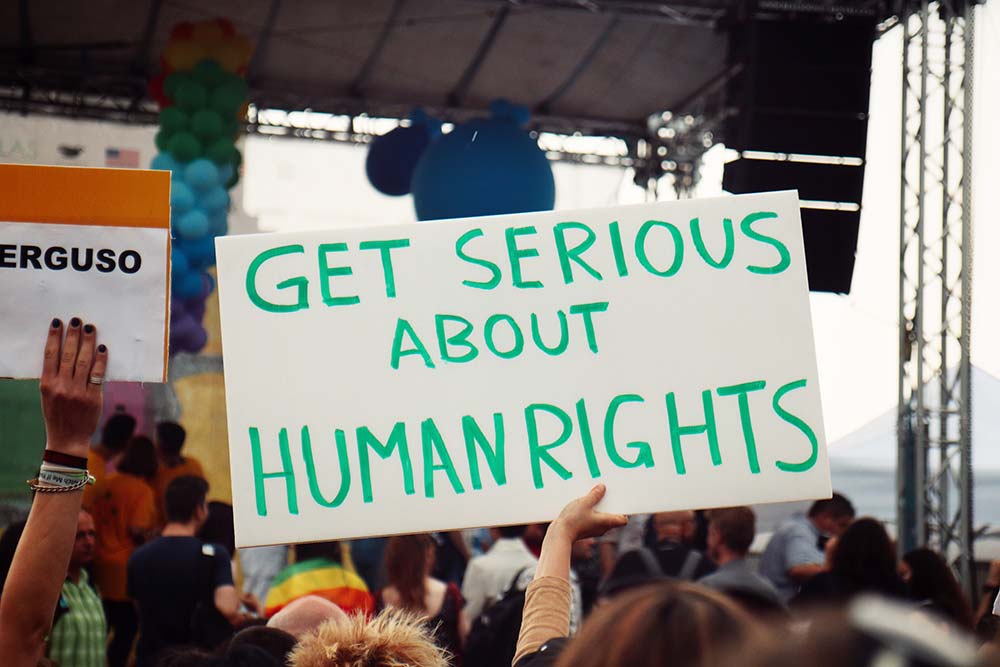
The assertion that human rights are not optional, even in the most severe crises, captures a fundamental ideal of modern legal and political thought. This principle suggests that rights are inherent and universal, providing a protective shield for individuals against the power of the state, particularly when that power is exercised under the pressure of an emergency. However, legal systems, including that of the United Kingdom through the Human Rights Act 1998 (HRA), which incorporates the European Convention on Human Rights (ECHR), acknowledge a tension between this ideal and the state’s duty to maintain order and security. This essay will examine the arguments supporting the absolute nature of human rights against the practical and legal arguments for allowing state flexibility during crises. It will conclude that while the law protects certain core rights absolutely, it provides a structured, yet contentious, mechanism for limiting others in exceptional circumstances.
The primary argument for the unwavering application of human rights is that crises are precisely when they are most needed. During emergencies, such as terrorist threats or pandemics, governments may be tempted to overreach their powers, and public fear can lead to the acceptance of repressive measures targeting minority groups. Human rights law serves as a crucial check on this executive power. The ECHR enshrines certain rights as non-derogable, meaning they cannot be suspended under any circumstances. These include the prohibition of torture (Article 3) and the right to life (Article 2), albeit with limited exceptions for the latter (Fenwick, 2017). The absolute nature of Article 3, for example, affirms that some actions are so contrary to human dignity that they can never be justified, regardless of the threat faced. The UK judiciary has affirmed this protective role. In *A and others v Secretary of State for the Home Department* [2005] UKHL 71, the House of Lords ruled that the indefinite detention of foreign terrorist suspects without trial was disproportionate and discriminatory, even though the government had declared a public emergency and derogated from its obligations under Article 5 (the right to liberty). This case demonstrates the judiciary’s role in upholding fundamental rights against executive claims of necessity during a crisis.
Conversely, there is a strong counterargument that states require a degree of flexibility to respond effectively to existential threats. The drafters of the ECHR recognised this by including Article 15, which permits a state to derogate from certain Convention rights “in time of war or other public emergency threatening the life of the nation.” The UK has used this power, most notably after the 9/11 attacks, leading to the legislation challenged in the *Belmarsh* case. The rationale is that the state’s primary duty is to protect the lives of its citizens, and fulfilling this duty may require temporary and targeted restrictions on other rights, such as liberty or privacy. The measures taken must be “strictly required by the exigencies of the situation,” a test which provides a legal safeguard against excessive action. More recently, the significant restrictions on liberty and assembly imposed by the Coronavirus Act 2020 during the COVID-19 pandemic illustrate this tension. While the UK government did not formally derogate under Article 15, the legislation granted extraordinary powers that substantially interfered with qualified rights, justifying them on public health grounds, demonstrating that even without derogation, rights are often balanced against wider community interests in a crisis.
In conclusion, the statement that human rights are not optional is an accurate reflection of the legal status of absolute rights like the prohibition of torture. These form a moral and legal bedrock that cannot be eroded, even in the worst crises. However, the legal framework of the ECHR and HRA 1998 creates a more nuanced reality for other rights. It does not make them “optional,” but rather subject to limitation and, in extreme cases, derogation. This system attempts to balance the protection of individual dignity against the state’s need to manage genuine emergencies. The strict conditions for derogation under Article 15 and the ongoing scrutiny by domestic and European courts show that any departure from human rights norms is intended to be a temporary, necessary, and proportionate exception, not a permanent abandonment of fundamental values.
References
- A and others v Secretary of State for the Home Department [2005] UKHL 71.
- Coronavirus Act 2020.
- European Convention on Human Rights.
- Fenwick, H. (2017) Civil Liberties and Human Rights. 7th edn. Routledge.
- Human Rights Act 1998.