

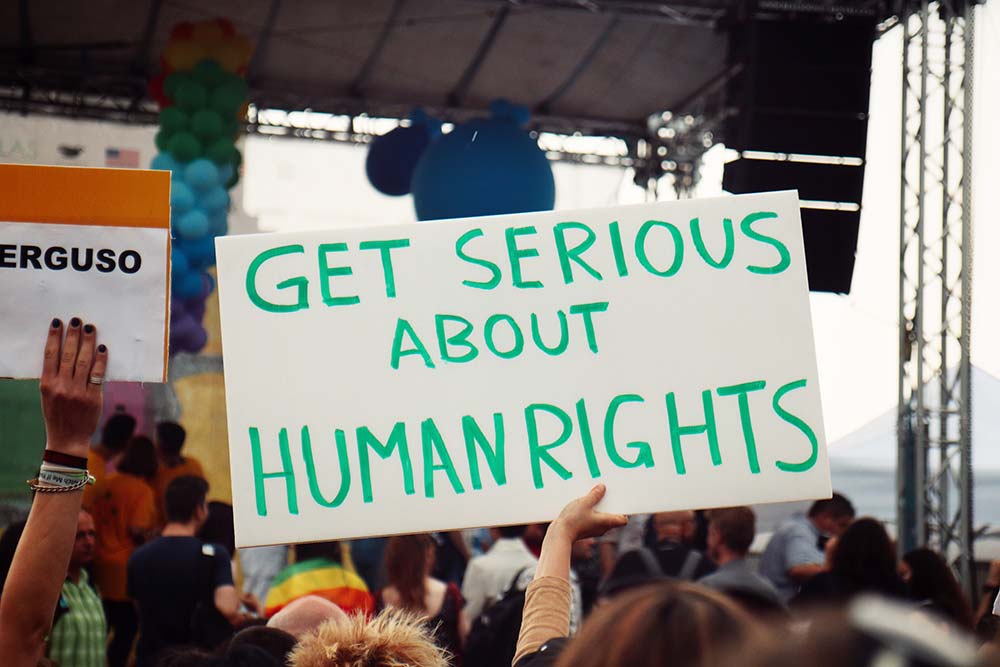
This advice will consider the potential claims of Raheema and Paul against the police under the Human Rights Act 1998 (HRA 1998) following the events at the Lincoln demonstration on 8 February 2025. The HRA 1998 incorporates rights from the European Convention on Human Rights (ECHR) into UK domestic law. As a public authority, the police have a legal duty under section 6 of the HRA 1998 to act in a way that is compatible with these Convention rights. If they fail to do so, their actions are unlawful, and a victim can bring a claim in a UK court.
This advice will be structured by first analysing Paul’s potential claim concerning the use of force against him, followed by an analysis of Raheema’s claims relating to her confinement and subsequent medical emergency. The likely success of their claims and the potential remedies will be assessed.
Paul’s Claim
Paul was shot in the eye by a plastic bullet while shouting slogans, resulting in the loss of his sight. His claim against the police would primarily be for a breach of Article 3 of the ECHR, which provides an absolute prohibition on torture, inhuman or degrading treatment or punishment.
Article 3 ECHR: Inhuman or Degrading Treatment
Article 3 states: "No one shall be subjected to torture or to inhuman or degrading treatment or punishment." This right is absolute, which means it cannot be limited or balanced against other interests, such as national security or the prevention of disorder (Chahal v UK, 1996). For ill-treatment to fall within the scope of Article 3, it must attain a "minimum level of severity" (Ireland v The United Kingdom, 1978). This assessment depends on all the circumstances of the case, including the duration of the treatment, its physical and mental effects, and the sex, age, and state of health of the victim.
In Paul’s case, he was shot by a plastic bullet, a form of Attenuating Energy Projectile, which caused him to lose sight in one eye. This is a severe and permanent injury. It is highly likely that this would be considered to meet the minimum level of severity required to engage Article 3. Treatment has been held to be ‘inhuman’ if it causes intense physical or mental suffering, and ‘degrading’ if it arouses feelings of fear, anguish, and inferiority capable of humiliating and debasing the victim (Pretty v UK, 2002). The sudden, violent, and permanent nature of Paul's injury would strongly support a finding of, at the very least, inhuman treatment.
The use of force by state agents, such as the police, is scrutinised very carefully by the courts. When force is used during a public demonstration, the key question is whether its use was justified. Although Article 3 is absolute, the use of force itself is not automatically a violation. Instead, the focus is on whether the force used was strictly necessary and proportionate. The European Court of Human Rights (ECtHR) has often considered that force which is not lethal, but which causes serious injury, can breach Article 3. The use of plastic bullets has been condemned where not absolutely necessary (Güleç v Turkey, 1998).
The police authorised the use of plastic bullets on individuals "deemed to be particularly dangerous." Paul was only "shouting slogans." While he was in a group where masked individuals were throwing rocks, there is no evidence that he was involved in this violence. The police may argue that in the chaos of the riot, it was impossible to distinguish between violent and peaceful protestors and that targeting Paul was a "genuine error," as their internal investigation concluded. However, this is a weak defence. The ‘absolutely necessary’ test, often applied by analogy from Article 2 (right to life), is a strict one (McCann and Others v UK, 1995). The police have a duty to plan and control their operations to minimise risk to individuals. Firing a potentially lethal projectile into a crowd where peaceful protestors are mixed with violent ones, and hitting someone who is not a threat, is unlikely to be considered a necessary or proportionate use of force. The fact it was an ‘error’ does not excuse the action but rather highlights a failure in the control of the operation. Therefore, a substantive breach of Article 3 appears very likely.
The Procedural Obligation under Article 3
In addition to the substantive right not to be subjected to ill-treatment, Article 3 also imposes a procedural obligation on the state to conduct an effective official investigation into credible allegations of serious ill-treatment by state agents (Assenov and Others v Bulgaria, 1998).
The requirements for an effective investigation are that it must be independent, thorough, and prompt, and allow for a degree of public scrutiny (Jordan v UK, 2001). In Paul's case, the investigation was handled by Nottinghamshire police officers. While not the same force that was primarily involved (Lincolnshire Police), an investigation by one police force into the actions of another may lack the "institutional independence" required by the ECtHR. The police are investigating the police, which raises questions of impartiality. The proper body for investigating serious complaints against the police is the Independent Office for Police Conduct (IOPC).
Furthermore, the investigation's conclusion that it was a "genuine error" and that no action should be taken seems dismissive and fails to properly hold anyone accountable for the serious injury caused. This suggests the investigation was not sufficiently thorough. Therefore, Paul has a strong secondary claim that the state has failed in its procedural duty to investigate, which constitutes a separate breach of Article 3.
Raheema’s Claim
Raheema’s claims arise from being held in a police cordon for five hours, during which she suffered a medical emergency with delayed assistance, leading to permanent injury. Her claims engage several ECHR rights.
Article 5 ECHR: Right to Liberty
Article 5(1) protects the right to liberty and security of person. Raheema was confined with other protestors on Saint Benedict Square for five hours and was not free to leave. This containment tactic, known as 'kettling', amounts to a deprivation of liberty (Austin v Commissioner of Police of the Metropolis, [2009] UKHL 5).
However, a deprivation of liberty is not automatically unlawful. In Austin, the House of Lords held that kettling could be justified and not breach Article 5 if the measures were taken in good faith, were proportionate, and were enforced for no longer than was reasonably necessary to deal with a real threat of serious public disorder.
The police will argue that the kettle was a necessary response to the rising violence, broken windows, and vandalism. They needed to contain the disorder to prevent it from spreading. They may argue that five hours was a reasonable period to restore order and process the individuals contained. However, Raheema can challenge this. Was confining everyone, including peaceful protestors like herself, a proportionate measure? Was it the least intrusive measure available? The fact the location was chosen for being "easy to cordon" might suggest convenience rather than necessity was the primary motive. Furthermore, the police required individuals to provide their identity, DNA, and fingerprints before they could be released. This seems coercive and goes beyond what might be considered reasonable for controlling a protest. In R (Moos and another) v Commissioner of Police of the Metropolis [2011], the High Court confirmed that a kettle could be unlawful if not based on a reasonable apprehension of an imminent breach of the peace. Here there was disorder, but the blanket nature of the kettle is still questionable.
Raheema's claim under Article 5 is arguable. While the police had grounds to act due to the violence, the length of the confinement and the coercive conditions for release may lead a court to find the kettle was disproportionate and therefore an unlawful deprivation of liberty.
Article 3 ECHR: Inhuman Treatment
Raheema’s strongest claim is likely to be under Article 3. While the conditions of a kettle have previously been found not to reach the Article 3 threshold of severity (Austin), Raheema's situation is different. The state has a positive obligation to protect the health and well-being of individuals in its custody (Kudła v Poland, 2000). By kettling Raheema, the police effectively took her into their control and assumed responsibility for her welfare.
Raheema suffered a hypoglycaemic episode, a serious medical condition. There was a significant delay of over 20 minutes for an ambulance to arrive, during which she had a cardiac arrest. This resulted in the permanent loss of function in her lower limbs. The police have a duty to ensure that necessary medical assistance is available for those they detain. Blaming "appalling traffic" is not a sufficient defence. The police created the situation; they cordoned off an area in a city centre, which would foreseeably cause traffic disruption and could impede emergency access. They should have planned for such medical emergencies. Their failure to provide prompt medical care to a person in their effective custody, which led to a near-fatal event and catastrophic, life-changing injuries, could certainly be considered inhuman treatment. The severity of the outcome for Raheema makes it much more likely that her treatment will cross the Article 3 threshold.
Article 11 ECHR: Freedom of Assembly
Article 11 protects the freedom of peaceful assembly. Kettling is a clear interference with this right. Such an interference can only be justified if it is prescribed by law, pursues a legitimate aim (such as the prevention of disorder), and is "necessary in a democratic society" (i.e., proportionate). The analysis here overlaps significantly with Article 5. The police have powers under the Public Order Act 1986 to impose conditions on protests to prevent serious disorder. However, using a kettle that contains hundreds of people, including peaceful protestors, for a long period is a drastic measure. It can have a "chilling effect" on future protests. A court would have to balance the police's aim of preventing disorder against Raheema's right to protest peacefully. As with the Article 5 claim, the success of this argument will depend on whether the court finds the police action to be a proportionate response to the violence that occurred.
Conclusion and Likely Success
In conclusion, both Paul and Raheema have strong claims for breaches of their rights under the HRA 1998.
Paul has a very high chance of success in his claim for a breach of Article 3. The use of a plastic bullet against a non-violent protestor, causing permanent loss of sight, is a severe use of force that the police will be unable to justify as "absolutely necessary". His claim is strengthened by the clear failure of the state to conduct an effective and independent investigation into the incident, which is a procedural breach of Article 3.
Raheema has an arguable claim for breach of Articles 5 and 11. The success of these claims will depend on the court's detailed examination of the proportionality of the police's decision to kettle the protestors for five hours. However, her claim for a breach of Article 3 is much stronger. The police's failure to provide her with timely and adequate medical care while she was effectively in their custody, leading to devastating and permanent injuries, is very likely to be found to constitute inhuman treatment.
If their claims are successful, under section 8 of the HRA 1998 the court can award remedies that are "just and appropriate." This would include a declaration that their Convention rights have been violated. More significantly, both would be entitled to substantial damages to compensate them for their injuries, suffering, and losses. Given the severity and permanence of both Paul’s and Raheema’s injuries, these damages awards would likely be very significant.
References
Cases
Assenov and Others v Bulgaria (1998) 28 EHRR 652
Austin v Commissioner of Police of the Metropolis [2009] UKHL 5
Chahal v UK (1996) 23 EHRR 413
Güleç v Turkey (1998) 28 EHRR 121
Ireland v The United Kingdom (1978) 2 EHRR 25
Jordan v UK (2001) 37 EHRR 2
Kudła v Poland (2000) 35 EHRR 11
McCann and Others v UK (1995) 21 EHRR 97
Pretty v UK (2002) 35 EHRR 1
R (Moos and another) v Commissioner of Police of the Metropolis [2011] EWHC 957 (Admin)
Legislation
Human Rights Act 1998
Public Order Act 1986
Books
Fenwick, H., (2017) Civil Liberties and Human Rights. 5th ed. Routledge.


