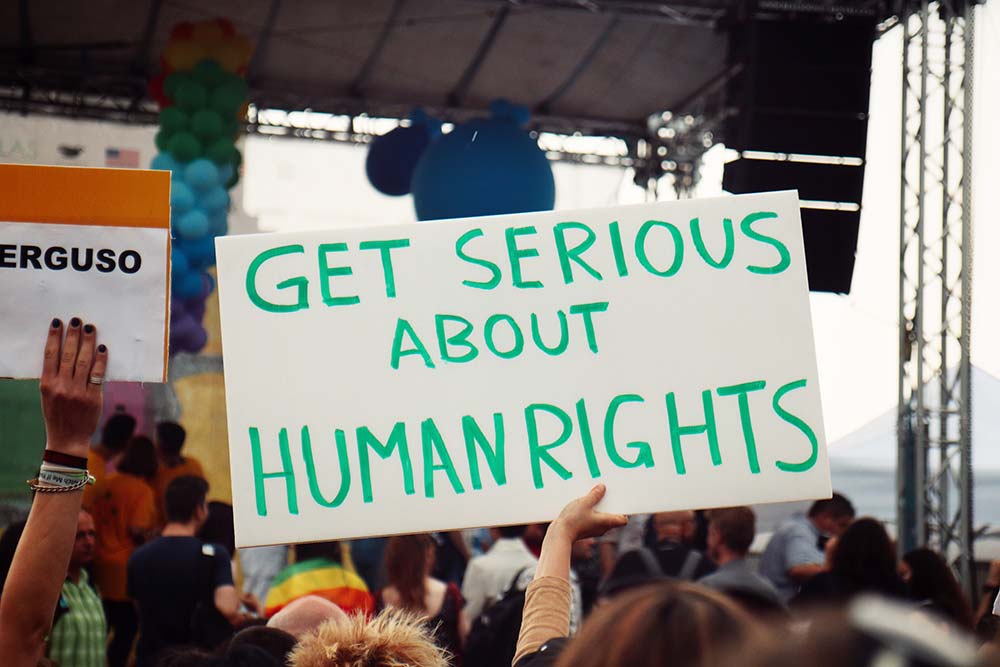
This essay will present an argument for the motion that "human beings are born free and equal in dignity and rights," the principle articulated in Article 1 of the Universal Declaration of Human Rights (UDHR). The UDHR, proclaimed by the United Nations General Assembly in 1948, stands as a foundational document in modern international relations and a "common standard of achievement for all peoples and all nations" (UN, 1948). This essay will argue that the principle in Article 1 is a valid and necessary ideal for three main reasons. First, it is grounded in established philosophical traditions of natural rights. Second, it was a crucial political and moral response to the unprecedented atrocities of the mid-20th century. Finally, its power lies in its aspirational and normative force, providing a benchmark against which the legitimacy of state actions can be measured.
The Philosophical Foundations of Human Equality
The concept that human beings possess inherent rights and an essential equality is not a modern invention. It has deep roots in political philosophy, particularly in the Enlightenment-era theories of natural law and natural rights. Thinkers such as John Locke argued that individuals exist in a "state of perfect freedom" and a "state also of equality," where this equality is derived from their shared status as creations of God, endowed with reason (Ishay, 2008). This philosophical tradition posits that rights are not granted by governments or monarchs but are intrinsic to human existence itself. They are "inalienable."
The drafters of the UDHR drew heavily upon this legacy. The inclusion of "dignity" alongside "free and equal" in Article 1 is significant. It suggests a quality of inherent worth that belongs to every person simply by virtue of being human, regardless of their circumstances, abilities, or social status. This dignity is the source from which their rights flow. Therefore, the argument for the motion rests on a long-standing philosophical conviction that freedom and equality are not social constructs to be given or taken away, but are part of the fundamental nature of humanity.
A Necessary Response to Historical Inhumanity
The historical context in which the UDHR was created is vital to understanding the force of Article 1. The Declaration was drafted in the immediate aftermath of the Second World War, a conflict characterised by the systematic dehumanisation and extermination of millions based on ideologies of racial and ethnic supremacy. The horrors of the Holocaust demonstrated the catastrophic consequences of rejecting the principle of human equality (Morsink, 1999).
In this context, Article 1 was not merely an abstract philosophical statement; it was a powerful and deliberate political rejection of the doctrines of inherent inequality that had led to such devastation. By declaring that all human beings are "born free and equal in dignity and rights," the international community was establishing a new moral and legal baseline for the post-war world. It was an assertion that the worth of a human being is universal and cannot be diminished by race, religion, or origin. The motion is therefore supported by the stark historical lesson that societies which deny this fundamental equality open the door to persecution and violence.
The Normative Power of an Aspirational Goal
A common objection to the principle is that it is demonstrably false as a statement of fact. Many individuals are born into poverty, servitude, or oppressive political systems that deny them freedom and equality from birth. However, this critique misunderstands the purpose of Article 1. The statement is not intended to be a descriptive account of the world as it is, but a prescriptive one of the world as it ought to be.
Its power is normative; it sets a standard. The principle of being "born free and equal" provides a universal benchmark that allows citizens, activists, and international bodies to critique and challenge the actions of governments that fail to uphold these ideals. The very existence of this standard creates a basis for political and legal claims against injustice. While the UDHR itself is not a legally binding treaty, its principles have inspired and been incorporated into numerous binding international covenants, regional charters, and national constitutions (Glendon, 2001). This demonstrates the practical effect of the aspirational language in Article 1. It creates a goal towards which societies must strive and provides the moral authority for demanding change when they fall short.
Conclusion
In conclusion, the argument for the motion that "human beings are born free and equal in dignity and rights" is compelling. The principle is not a naive description of reality but a profound and necessary ideal. It is firmly rooted in philosophical traditions that locate rights within human nature itself. It serves as a vital historical and political condemnation of ideologies based on inequality, born from the devastation of the Second World War. Finally, its primary value lies in its normative force as a universal standard, providing an enduring basis for the pursuit of justice and the protection of human dignity across the globe. While the world often fails to meet this standard, the principle remains an indispensable foundation for a more just and humane global order.
References
Glendon, M. A. (2001) A World Made New: Eleanor Roosevelt and the Universal Declaration of Human Rights. Random House.
Ishay, M. R. (2008) The History of Human Rights: From Ancient Times to the Globalization Era. University of California Press.
Morsink, J. (1999) The Universal Declaration of Human Rights: Origins, Drafting, and Intent. University of Pennsylvania Press.
United Nations. (1948) The Universal Declaration of Human Rights. <https://www.un.org/en/about-us/universal-declaration-of-human-rights>