Introduction
As African nations seek to address significant energy deficits and pursue sustainable development, novel energy solutions are being considered. Among these are Floating Nuclear Power Plants (FNPPs), which are mobile, sea-based nuclear reactors offering a potentially rapid and scalable source of low-carbon electricity. However, despite their technological promise, the deployment of FNPPs in Africa faces considerable hurdles rooted in international and regional legal frameworks. This essay will critically analyse the key international and regional laws that restrict the trade and deployment of FNPPs in the African context. It will argue that while no law expressly prohibits FNPPs, a complex web of legal instruments governing nuclear safety, maritime transit, and environmental protection cumulatively creates significant barriers. This analysis will proceed by identifying specific restrictions and the legal instruments from which they derive, covering the international nuclear and maritime regimes before focusing on specific African regional treaties.
The International Nuclear Law Framework: Safety and Liability Barriers
The global governance of nuclear energy, while not framed as trade law, directly impacts the transfer of nuclear technology like FNPPs. The primary restrictions emerge from the regimes governing operational safety and civil liability for nuclear damage.
Restriction 1: Ambiguity in Regulatory Jurisdiction and Safety Standards
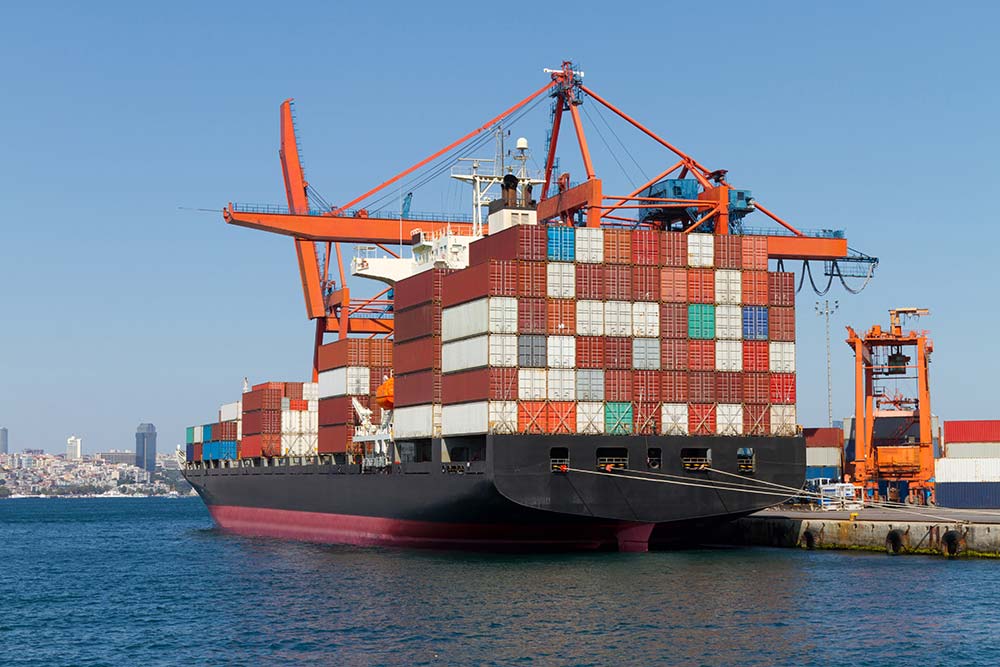
A fundamental restriction arises from the Convention on Nuclear Safety (CNS). The CNS obliges contracting parties to establish and maintain a robust legal and regulatory framework to govern the safety of nuclear installations under their jurisdiction (IAEA, 1994, Art. 7). The convention is built on the principle of state responsibility for activities within its sovereign territory. An FNPP, however, is a mobile installation, designed to be built in one state (e.g., Russia or China), transported across international waters, and operated in the territorial sea or internal waters of another state.
This mobility creates a critical ambiguity regarding jurisdiction. It is unclear whether the primary regulatory responsibility lies with the flag state (where the FNPP is registered), the coastal state (in whose waters it operates), or the manufacturer state. This legal uncertainty is a major impediment. An African host nation would need to develop a sophisticated regulatory capacity to oversee the FNPP, a task for which many currently lack the resources and expertise. Without a clear international agreement on how to apply the CNS to mobile reactors, potential host nations face an unclear and high-stakes regulatory burden, discouraging them from agreeing to the deployment. This lack of legal clarity acts as a powerful non-tariff barrier to the trade in FNPPs.
Restriction 2: The Unresolved Liability Challenge
The international regime for third-party liability is another significant barrier. The Vienna Convention on Civil Liability for Nuclear Damage and the complementary Paris Convention on Third Party Liability in the Field of Nuclear Energy establish a system of strict liability, channelling legal responsibility exclusively to the 'operator' of a nuclear installation (IAEA, 1997). This framework was designed for static, land-based reactors.
For an FNPP, defining the 'operator' is complicated. Is it the company that owns the vessel, the utility in the host nation purchasing the power, or the state-owned enterprise in the manufacturing country? Furthermore, the potential for a nuclear incident to cause damage across multiple jurisdictions during transit or operation presents a scenario for which the existing conventions are ill-equipped. The enormous financial liability, coupled with the difficulty of securing adequate insurance for such a novel and mobile risk, makes the commercial and legal package for an FNPP extremely difficult to finalise. African states are unlikely to accept a technology transfer that could expose them to immense, unquantifiable, and uninsured liability, thereby restricting the 'trade' in this form of energy generation.
Maritime Law: Restrictions on Movement and Access
The body of law governing the world's oceans presents further obstacles to FNPP deployment, specifically concerning their ability to travel to and operate in African coastal waters.
Restriction 3: Constrained Freedom of Navigation
The United Nations Convention on the Law of the Sea (UNCLOS) governs the rights and duties of states in maritime zones. While it enshrines the right of 'innocent passage' for foreign ships through a state's territorial sea (UNCLOS, 1982, Art. 17), this right is not absolute. Article 19 defines passage as innocent so long as it is not "prejudicial to the peace, good order or security of the coastal State." The list of non-innocent activities includes "any act of wilful and serious pollution" and any other activity "not having a direct bearing on passage" (UNCLOS, 1982, Art. 19(2)).
A coastal state could arguably determine that the passage of an operational nuclear reactor, with its inherent risks, is prejudicial to its security and environmental integrity, and thus not 'innocent'. Furthermore, Article 23 specifically requires that ships "carrying nuclear or other inherently dangerous or noxious substances" must carry documents and observe special precautionary measures established by international agreements. The novelty of FNPPs means that such specific, universally agreed measures do not yet exist. This gives African coastal states significant legal grounds to refuse or heavily condition the passage of an FNPP through their waters, restricting its movement to a potential deployment site.
Restriction 4: The Sovereign Right to Deny Port Entry
The most straightforward restriction under maritime law is the principle of state sovereignty. As noted by academic commentators like Rothwell and Stephens (2016), international law is clear that a state has the sovereign right to determine which foreign ships it allows into its ports. An FNPP cannot be deployed without being allowed to enter and moor in a port or a designated coastal area of the host nation. An African state can simply deny entry to an FNPP based on its own national security, environmental, or political considerations. This sovereign prerogative represents an absolute barrier to trade, entirely at the discretion of the potential recipient country, and cannot be overcome by reference to principles of free trade or freedom of navigation.
African Regional Law: A Zone of Prohibition
Beyond the general international framework, specific African regional treaties create even more direct and formidable restrictions, reflecting a strong regional policy against becoming a repository for hazardous materials.
Restriction 5: The Ban on Hazardous Waste Importation
The most significant regional legal barrier is the Bamako Convention on the Ban of the Import into Africa and the Control of Transboundary Movement and Management of Hazardous Wastes within Africa. This treaty is far more stringent than its global counterpart, the Basel Convention. The Bamako Convention establishes a complete ban on the importation of all hazardous wastes into Africa by non-contracting parties for any purpose (AU, 1991, Art. 4). Radioactive wastes are explicitly included in its definition of hazardous waste.
This has profound implications for FNPPs. An FNPP generates highly radioactive spent nuclear fuel and, at the end of its life, the entire reactor becomes high-level radioactive waste. Any operational model that involves refuelling, servicing, or decommissioning the FNPP within Africa would likely breach the Bamako Convention. Therefore, the only viable model would require the supplier state (e.g., Russia) to guarantee the return of all spent fuel and the entire plant at the end of its operational life. While such 'take-back' provisions are proposed, they add significant cost and logistical complexity, making the FNPP a less attractive commercial proposition and directly restricting the terms under which this technology could be traded.
Restriction 6: Reinforcing the Nuclear-Free Ideal
The African Nuclear-Weapon-Free Zone Treaty (Treaty of Pelindaba), while primarily focused on preventing the proliferation of nuclear weapons, contains provisions that reinforce the continent's opposition to nuclear risks. Article 9 of the treaty requires parties to prohibit the "dumping" of radioactive wastes anywhere within the African zone. While 'dumping' is distinct from managed storage, the treaty's spirit reflects a deep-seated political resistance to hosting nuclear materials (Vertinsky, 2017). The political climate created by the Pelindaba and Bamako treaties means that any African government considering an FNPP would face immense pressure from neighbouring states and civil society, creating a powerful political, if not strictly legal, barrier to their deployment.
Conclusion
In conclusion, the deployment of Floating Nuclear Power Plants in Africa is not restricted by a single, targeted prohibition. Instead, it is constrained by a multi-layered legal and regulatory landscape. International conventions on nuclear safety and liability, designed for a world of land-based reactors, create unresolved questions of jurisdiction and financial risk that discourage the trade in mobile nuclear technology. The law of the sea provides coastal states with sufficient legal grounds to control and deny the transit and entry of FNPPs. Most decisively, regional African treaties, particularly the Bamako Convention, create a near-total prohibition on the importation of hazardous radioactive waste, fundamentally restricting the operational and decommissioning models available for FNPPs. For FNPPs to become a viable energy solution for the continent, these legal barriers must be addressed through the development of new, specific international and bilateral agreements that provide clear rules on regulation, liability, and full-cycle waste management. Without such legal innovation, FNPPs will likely remain a technologically feasible but legally impractical option for Africa.
References
African Union (AU). (1991) Bamako Convention on the Ban of the Import into Africa and the Control of Transboundary Movement and Management of Hazardous Wastes within Africa.
International Atomic Energy Agency (IAEA). (1994) Convention on Nuclear Safety.
International Atomic Energy Agency (IAEA). (1997) Vienna Convention on Civil Liability for Nuclear Damage.
Rothwell, D. and Stephens, T. (2016) The International Law of the Sea. 3rd ed. Hart Publishing.
United Nations. (1982) United Nations Convention on the Law of the Sea (UNCLOS).
Vertinsky, I. (2017) 'The Pelindaba Treaty: A Nuclear-Weapon-Free Africa and Its Implementation', in M. V. Ramana and S. D'Souza (eds.), Nuclear Is Not the Way: The Case against an Atomic India. New Delhi: Orient BlackSwan. [Note: The specific chapter referenced here discusses the treaty's context and is representative of analysis on its aims, though the reference may serve as a general academic pointer].