

Introduction
As many African nations seek to overcome significant energy deficits and fuel economic development, innovative energy solutions are of increasing interest. Among these is the concept of Floating Nuclear Power Plants (FNPPs), mobile, small-scale nuclear reactors that could provide reliable electricity to coastal regions. However, the deployment of such technology is not merely a technical or economic matter; it is constrained by a complex web of international law. This essay will critically analyse how international legal frameworks, while not traditional trade laws, function to restrict the trade and deployment of FNPPs in Africa. The analysis will focus on two key pillars of the global nuclear order: the Treaty on the Non-Proliferation of Nuclear Weapons (NPT) and the guidelines of the Nuclear Suppliers Group (NSG). It will be argued that these regimes, designed to prevent the spread of nuclear weapons, impose significant legal, institutional, and political barriers that complicate, and in some cases may prohibit, the transfer of FNPP technology to African states.
The Context: FNPPs and Africa's Energy Imperative
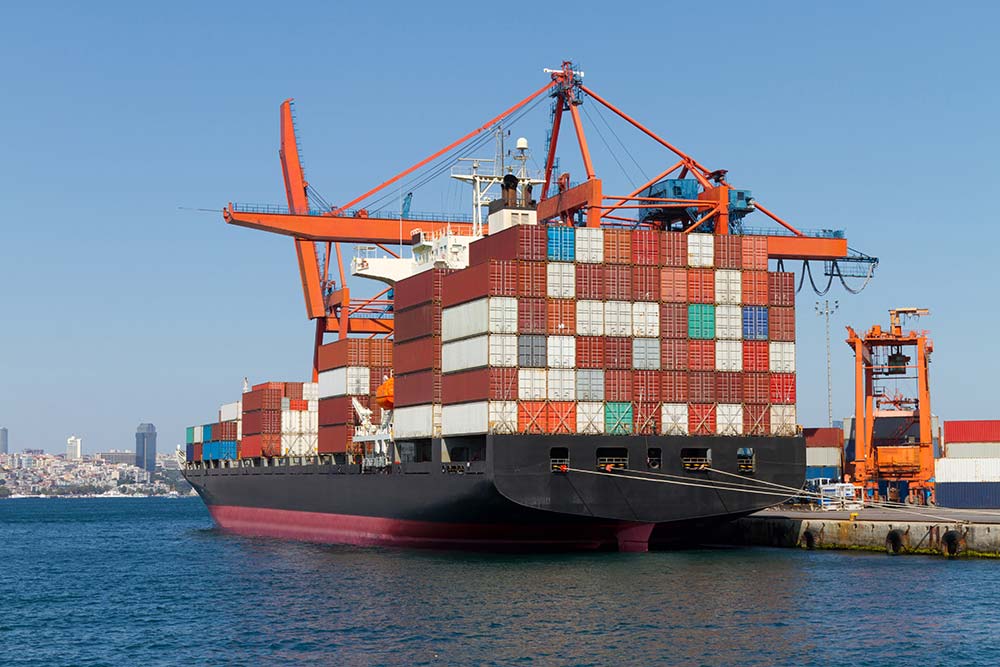
An FNPP is a non-self-propelled platform on which a nuclear power reactor is installed, designed to be towed to a specific location to generate electricity for onshore consumption. The most prominent example is Russia’s Akademik Lomonosov, which began operations in 2020, demonstrating the viability of the concept (World Nuclear Association, 2023). For many African countries, characterised by growing populations and a desire for industrialisation, the prospect of a turnkey, reliable, and low-carbon power source is attractive. FNPPs could electrify coastal cities, power industrial zones, or run desalination plants without requiring the same long-term land commitment as a conventional nuclear plant.
However, the technology inherently involves sensitive nuclear materials and technology, raising significant concerns related to safety, security against theft or sabotage, environmental risks from accidents, and the long-term management of spent nuclear fuel (Dubey, 2020). It is these risks that the international non-proliferation regime is designed to mitigate, and in doing so, it creates restrictive conditions for any prospective recipient state.
The Treaty on the Non-Proliferation of Nuclear Weapons (NPT)
The NPT is the cornerstone of the global non-proliferation regime. Opened for signature in 1968, it is built on a bargain between the five recognised nuclear-weapon states and the non-nuclear-weapon states. The treaty has three pillars: non-proliferation, disarmament, and the right to the peaceful use of nuclear energy. The potential for FNPP deployment in Africa engages directly with the tension between the third and first pillars.
Article IV of the NPT establishes that nothing in the Treaty shall be interpreted as affecting the "inalienable right of all the Parties to the Treaty to develop research, production and use of nuclear energy for peaceful purposes" (Treaty on the Non-Proliferation of Nuclear Weapons, 1968, Art IV). On its face, this article appears to provide a strong legal basis for an African state, as a party to the NPT, to acquire an FNPP. However, this right is not absolute. It is explicitly conditioned on conformity with Articles I and II of the Treaty, which prohibit the transfer or acquisition of nuclear weapons, and Article III, which requires non-nuclear-weapon states to accept international safeguards.
The crucial restriction arising from the NPT is the requirement under Article III to conclude a Comprehensive Safeguards Agreement (CSA) with the International Atomic Energy Agency (IAEA). These agreements give the IAEA the right and obligation to verify that a state’s nuclear material and activities are used exclusively for peaceful purposes (IAEA, n.d.). For an African state seeking to host an FNPP, this would mean placing the FNPP and its fuel under IAEA inspection and monitoring. This imposes several burdens. Firstly, it requires the state to have a competent national regulatory authority to interface with the IAEA and implement the safeguards. This represents a significant institutional and human capacity challenge for countries with no prior experience in the nuclear sector (Sokolski, 2011). Secondly, the unique nature of an FNPP, often involving a 'lease' model where the supplier state owns and operates the reactor and manages the fuel, creates complex legal questions over which state is responsible for implementing the safeguards (Hibbs, 2018). While the IAEA is developing specific guidance for transportable nuclear power units, the existing framework was designed for static, land-based facilities, and its application to FNPPs remains a source of legal and procedural complexity that can delay or deter projects. Therefore, while the NPT grants a right to peaceful nuclear energy, the associated safeguards obligations function as a significant regulatory barrier.
The Nuclear Suppliers Group (NSG)
The NSG is an informal group of 48 nuclear supplier countries that aims to prevent nuclear proliferation by controlling the export of materials, equipment, and technology that could be used to make nuclear weapons. The NSG is not a treaty body; it operates through a set of politically binding guidelines that its members agree to implement through their national export control laws (NSG, n.d.). Its influence on the trade in nuclear technology like FNPPs is arguably more direct and restrictive than that of the NPT.
The NSG Guidelines go further than the NPT. A fundamental condition for the supply of 'Trigger List' items – which would include the reactor and fuel for an FNPP – to a non-nuclear-weapon state is that the recipient state must have a legally binding, full-scope safeguards agreement with the IAEA (INFCIRC/254/Rev.14/Part 1). This means the state must agree to IAEA safeguards on all its current and future peaceful nuclear activities, not just the imported item. While most African states are NPT parties and have CSAs, this requirement can be a barrier for states that are not parties or are not in full compliance.
Furthermore, the NSG Guidelines contain a 'non-proliferation principle' requiring suppliers to exercise restraint in the transfer of sensitive enrichment and reprocessing technologies. While an FNPP itself may not fall into this category, the guidelines also mandate a comprehensive evaluation of the recipient state. Suppliers must consider whether there is a risk of diversion, whether the country is in a region of tension, and whether it has an effective and adequate system of physical protection for nuclear material (INFCIRC/254/Rev.14/Part 1, para 4). For many African regions facing political instability or security challenges, these criteria can become significant obstacles. A supplier state, such as Russia or China, would have to justify the transfer to other NSG members, and any member could effectively block the transfer if it has proliferation concerns. This introduces a highly politicised layer of control over the trade in FNPPs, turning a commercial or developmental decision into a matter of international security politics, thereby restricting access for states deemed to be a risk (Fuhrmann, 2009).
Regional Considerations: The Treaty of Pelindaba
The African context is also shaped by the African Nuclear-Weapon-Free Zone Treaty, known as the Treaty of Pelindaba, which entered into force in 2009. This treaty prohibits the research, development, manufacture, stockpiling, acquisition, possession or control of any nuclear explosive device by any means anywhere on the African continent. Importantly, like the NPT, it affirms the right of each party to use nuclear energy for peaceful purposes. However, it reinforces the restrictive aspects of the global regime by requiring all parties to conclude full-scope safeguards agreements with the IAEA and to maintain the highest standards of physical protection of nuclear materials and facilities (African Nuclear-Weapon-Free Zone Treaty, 1996, Art 9 & Annex IV). Therefore, for the 54 state signatories across Africa, the regional framework does not offer an alternative path but instead adds another layer of legal obligation, solidifying the requirements imposed by the NPT and expected by the NSG.
Conclusion
In conclusion, the international laws governing nuclear technology, while framed around the dual objectives of non-proliferation and peaceful use, operate in practice as a significant restrictive force on the deployment of FNPPs in Africa. The NPT, through its mandatory IAEA safeguards, imposes considerable institutional and regulatory burdens that many potential African recipient states may struggle to meet. The Nuclear Suppliers Group adds a more explicit layer of trade control, creating a supplier-driven system where political and security assessments can override a state's 'inalienable right' to peaceful nuclear technology. These international frameworks are further reinforced by regional agreements like the Treaty of Pelindaba. Consequently, for an African nation, the path to acquiring an FNPP is not a straightforward commercial transaction but a complex journey through a legal and political landscape designed primarily to mitigate security risks. While FNPPs may hold promise for Africa's energy future, the existing international legal architecture ensures that access to this technology will be slow, conditional, and limited to those states that can satisfy the stringent demands of the global non-proliferation regime.
References
African Nuclear-Weapon-Free Zone Treaty (Treaty of Pelindaba) (1996) Cairo.
Dubey, S. (2020) Floating nuclear power plants: A threat to the marine environment. Marine Policy, 117, 103947.
Fuhrmann, M. (2009) Spreading the Bomb: Why Nuclear Proliferation Occurs. International Security, 34(1), pp. 7-50.
Hibbs, M. (2018) The Future of Nuclear Power in the Gulf. Carnegie Endowment for International Peace.
International Atomic Energy Agency (IAEA). (n.d.) IAEA Safeguards Overview. [Online] Available at: https://www.iaea.org/topics/safeguards (Accessed: 15 May 2024).
Nuclear Suppliers Group (NSG). (n.d.) Guidelines. [Online] Available at: https://www.nuclearsuppliersgroup.org/en/guidelines (Accessed: 15 May 2024).
Nuclear Suppliers Group (2021) Communication Received from the Permanent Mission of Argentina to the International Atomic Energy Agency regarding the Guidelines for the Export of Nuclear Material, Equipment and Technology, INFCIRC/254/Rev.14/Part 1. IAEA.
Sokolski, H. (2011) Nuclear Power's Global Expansion: Weighing Its Costs and Risks. Strategic Studies Institute, US Army War College.
Treaty on the Non-Proliferation of Nuclear Weapons (NPT) (1968) London, Moscow and Washington.
World Nuclear Association. (2023) Nuclear Power in Russia. [Online] Available at: https://world-nuclear.org/information-library/country-profiles/countries-o-s/russia-nuclear-power.aspx (Accessed: 15 May 2024).



