

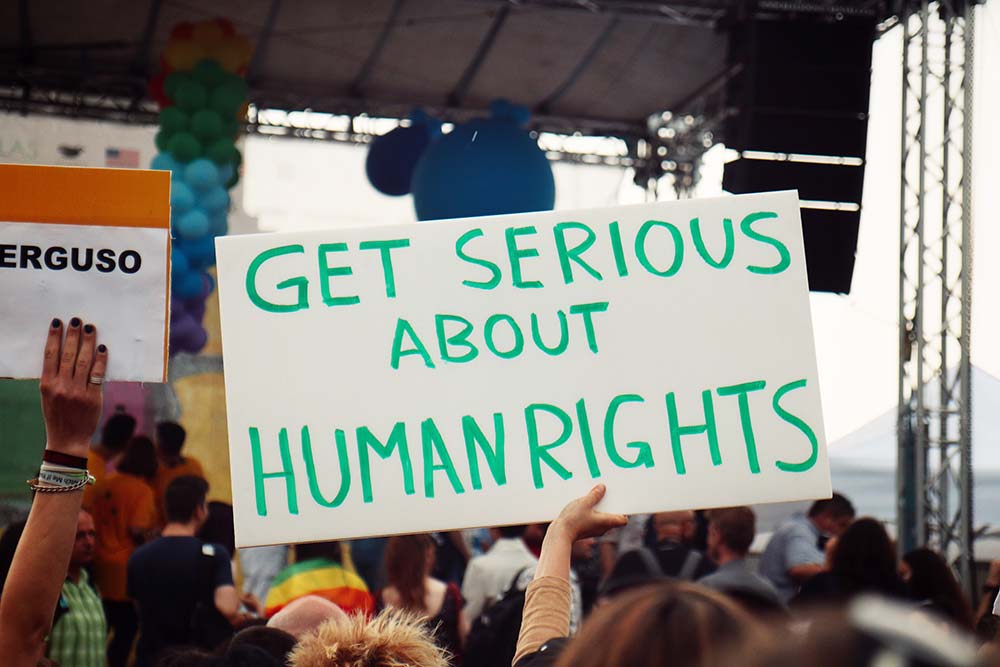
This essay will evaluate the statement that “Human rights act as a shield, protecting individuals from abuses of power by the state.” The analysis will be conducted in three parts, each focusing on a distinct phrase from the statement as requested. The first part will examine the metaphor of human rights as a “shield.” The second part will consider the scope of protection for “individuals.” The third part will assess the idea that this protection is exclusively “from abuses of power by the state.” Finally, this essay will propose a revised statement that offers a more complete and accurate description of the function of human rights in the UK legal system.
—
A.1 “Human rights act as a shield”
The characterisation of human rights as a “shield” effectively captures their primary defensive function within a legal system. This metaphor suggests that human rights serve as a protective barrier, empowering a person to resist or defend against unwarranted intrusions by a more powerful entity, typically the state. In the context of England and Wales, this function is principally given legal force by the Human Rights Act 1998 (HRA 1998), which incorporates most of the rights from the European Convention on Human Rights (ECHR) into domestic law.
The “shield” function is most clearly demonstrated by Section 6(1) of the HRA 1998, which makes it “unlawful for a public authority to act in a way which is incompatible with a Convention right.” This provision allows an individual to challenge an action or decision of a public body in court, using their Convention rights as a defence. For example, in R v Secretary of State for the Home Department, ex parte Daly (2001), the House of Lords held that a blanket policy requiring prisoners to be absent when their legal correspondence was examined by prison staff was an unlawful interference with the right to respect for correspondence, protected under Article 8 ECHR. The right acted as a shield, protecting the prisoner’s confidential communications from an unjustified state policy. This demonstrates the classic model of human rights: preventing the state from overstepping its legitimate boundaries and infringing upon the fundamental freedoms of the individual.
However, the metaphor of a “shield” is not entirely complete. Firstly, the shield is not impenetrable. Many Convention rights, such as Articles 8 (right to private and family life), 9 (freedom of thought, conscience and religion), 10 (freedom of expression), and 11 (freedom of assembly), are qualified rights. This means the state can lawfully interfere with them if the interference is prescribed by law, serves a legitimate aim (such as national security or the protection of the rights of others), and is “necessary in a democratic society.” Courts must perform a balancing act, weighing the individual’s right against the interests of the wider community. This process of proportionality analysis means the shield can be lowered if the state provides sufficient justification, limiting its absolute protective power (Klug, 2000).
Secondly, the "shield" metaphor primarily suggests a negative or defensive role, where rights block state action. It fails to capture the positive obligations that human rights can impose on the state. For some rights, the state is required not just to refrain from interference but to take active steps to protect individuals. The European Court of Human Rights established in Osman v United Kingdom (1998) that the right to life (Article 2) imposes a positive duty on the state to take reasonable measures to protect individuals whose lives are at risk from the criminal acts of others. This proactive duty, which requires the state to act rather than merely refrain from acting, is better described as a “sword” that individuals can use to compel state action, rather than simply a defensive “shield.” Therefore, while the shield analogy is a useful starting point, it oversimplifies the function of human rights by overlooking the qualified nature of many rights and the existence of positive state obligations.
A.2 “Protecting individuals”
The statement correctly identifies that human rights are fundamentally concerned with “protecting individuals.” The language of the ECHR is centred on the entitlements of the person, using terms like “everyone” (as in Article 5, the right to liberty) or “no one” (as in Article 3, the prohibition of torture). The purpose of these rights is to safeguard human dignity and autonomy against overwhelming power. This protection applies to all human beings within the jurisdiction of a state, irrespective of their nationality or citizenship status, which is a foundational principle of international human rights law.
However, the term “individuals” can be interpreted narrowly as referring only to natural persons. In reality, the protection afforded by some Convention rights extends to legal persons, most notably corporations and non-governmental organisations. This is significant because it shows that the beneficiaries of human rights are not exclusively human beings. For instance, the right to freedom of expression under Article 10 and the right to peaceful enjoyment of possessions under Article 1 of the First Protocol (A1P1) have been successfully invoked by companies. In R (Animal Defenders International) v Secretary of State for Culture, Media and Sport (2008), the applicant was an organisation challenging the ban on political advertising, relying on its Article 10 rights. Similarly, corporations can use A1P1 to protect their property from expropriation by the state without adequate compensation. While personal rights such as the right to life (Article 2) or the right not to be subjected to torture (Article 3) are clearly intended for natural persons, the scope of protection is wider for other rights.
Furthermore, focusing solely on “protecting individuals” overlooks the collective or societal dimension of human rights. While rights are held by individuals, their exercise often has a group component and their existence benefits society as a whole. For example, the right to freedom of assembly and association under Article 11 is by its nature a collective right, designed to be exercised in community with others. Moreover, the protection of rights like freedom of expression is not just for the benefit of the speaker but for the wider public, who have an interest in receiving information and ideas. A society that upholds human rights is generally considered to be more democratic, stable, and just, which is a collective good extending beyond the protection of any single person (Feldman, 2013). Thus, the statement that human rights protect “individuals” is true but incomplete, as it does not account for the extension of some rights to legal persons or the broader societal benefits that a human rights framework provides.
A.3 “From abuses of power by the state”
The final part of the statement claims that human rights protect individuals “from abuses of power by the state.” This reflects the traditional understanding of human rights as regulating the relationship between the citizen and the government, a concept known as ‘vertical effect’. The HRA 1998 is constructed around this principle. As noted earlier, Section 6 makes it unlawful for a ‘public authority’ to breach a Convention right. A ‘public authority’ includes core state bodies like government departments, the police, and prisons, as well as ‘hybrid’ or ‘functional’ public authorities—private bodies that perform functions of a public nature, as determined by the test in Aston Cantlow and Wilmcote v Wallbank (2003). In this vertical dimension, the statement is accurate; the HRA is a tool for holding the state and its agents to account.
However, this description is incomplete because it ignores the significant power that can be wielded by private actors. In modern society, multinational corporations, media organisations, or even powerful private individuals can pose a threat to people’s rights. For example, a newspaper can infringe upon a celebrity’s privacy, or a private employer could restrict an employee’s freedom of speech. The statement in the question does not account for these ‘horizontal’ scenarios.
The HRA 1998 does not create a direct cause of action between one private party and another (direct horizontal effect). You cannot sue your neighbour directly under the HRA for a breach of your Article 8 rights. Nevertheless, the Act has an important ‘indirect horizontal effect’. This arises from Section 6(1), which identifies courts themselves as public authorities. As such, courts are required to act in a way that is compatible with Convention rights. This duty means that when they are deciding cases between private parties, they must interpret and develop existing common law doctrines (like negligence, nuisance, or breach of confidence) in a way that gives effect to the ECHR.
A leading example of this is Campbell v MGN Ltd (2004). This case involved a dispute between the model Naomi Campbell and the Mirror Group Newspapers over the publication of details about her treatment for drug addiction. The House of Lords, balancing Campbell’s Article 8 right to privacy against the newspaper’s Article 10 right to freedom of expression, extended the common law action for breach of confidence to create a new tort of misuse of private information. The HRA 1998 was not the direct cause of action, but it profoundly influenced the development of the common law that governed the dispute between the two private parties. Therefore, the statement that human rights protect only against the state is untrue, as it overlooks the crucial role of indirect horizontal effect in protecting individuals from abuses of power by other private entities.
B. Suggest a truer and more complete statement
Based on the analysis above, the original statement is a reasonable but ultimately inadequate summary of the function of human rights. A truer and more complete statement would be:
“Human rights provide a legal framework that primarily functions to shield individuals and organisations from abuses of state power, while also imposing positive duties on the state to protect rights and indirectly shaping the common law to regulate relationships between private parties.”
This revised statement is more accurate for several reasons. First, “provides a legal framework” is a more neutral and comprehensive description than “act as a shield,” which only captures the defensive aspect. Second, it explicitly acknowledges that protection extends beyond “individuals” to include “organisations.” Third, it incorporates the concept of “positive duties,” recognising that rights can act as a sword as well as a shield. Finally, and most importantly, it qualifies the focus on the state by including the crucial concept that human rights also “indirectly shaping the common law to regulate relationships between private parties,” thereby accounting for the indirect horizontal effect of the HRA 1998. This revised formulation presents a more nuanced and complete picture of the role of human rights in the UK legal landscape.
References
Aston Cantlow and Wilmcote with Billesley Parochial Church Council v Wallbank [2003] UKHL 37.
Campbell v MGN Ltd [2004] UKHL 22.
Feldman, D. (2013) Civil Liberties and Human Rights in England and Wales. 3rd edn. Oxford University Press.
Human Rights Act 1998.
Klug, F. (2000) Values for a Godless Age: The Story of the United Kingdom's New Bill of Rights. Penguin.
Osman v United Kingdom (1998) 29 EHRR 245.
R v Secretary of State for the Home Department, ex parte Daly [2001] UKHL 26.
R (on the application of Animal Defenders International) v Secretary of State for Culture, Media and Sport [2008] UKHL 15.


