Original essay question / assignment brief
The accumulation of all powers may justly be pronounced the very definition of tyranny. Discuss this statement by James Madison with reference to theoretical foundations of the separation of powers.
James Madison’s assertion in *The Federalist No. 47* that the “accumulation of all powers, legislative, executive, and judiciary, in the same hands, whether of one, a few, or many… may justly be pronounced the very definition of tyranny” provides a powerful summary of the central fear that animates liberal constitutional thought (Madison, 1788). This statement is not merely a rhetorical flourish but encapsulates the core principle behind the doctrine of the separation of powers. This essay will argue that Madison’s warning accurately reflects the theoretical foundations of this doctrine, which were primarily developed to safeguard individual liberty by preventing the concentration of governmental power. To discuss this, the essay will first explore the concept of tyranny as understood by Madison. It will then examine the contributions of key political theorists, namely John Locke and Baron de Montesquieu, whose ideas provided the intellectual framework for Madison’s conclusion. Finally, it will briefly consider how these theoretical concerns have been addressed in different constitutional models, demonstrating the enduring relevance of Madison’s statement.
At its heart, Madison’s statement is a claim about the relationship between power and freedom. Tyranny, in this context, does not necessarily mean the rule of a single violent despot, but rather any system of governance where power is exercised arbitrarily and without legal restraint. The accumulation of all powers in a single entity creates the perfect conditions for such rule. If the same body that makes the laws (the legislative function) also enforces them (the executive function) and interprets them in disputes (the judicial function), then there is no external check on its authority. Such a body could create oppressive laws to benefit itself, apply them selectively against its opponents, and act as the judge in its own cause. Citizens would have no recourse to an independent body for protection, leaving their rights and liberties at the mercy of the rulers. This fear of unchecked power was particularly potent for the American Founders, who saw their struggle against the British Crown as a fight against a tyrannical system where executive and legislative powers were, in their view, dangerously intertwined and unaccountable to the colonists.
The theoretical groundwork for Madison’s conclusion was laid by earlier thinkers, most notably John Locke. Writing in the aftermath of England’s own struggles with monarchical power, Locke, in his *Second Treatise of Government* (1689), argued for a division of governmental functions as a bulwark against arbitrary rule. Although he did not articulate the tripartite division familiar to us today, he distinguished between the legislative power, which he saw as supreme, and the executive power. Locke argued that “it may be too great a temptation to human frailty, apt to grasp at power, for the same persons who have the power of making laws to have also in their hands the power to execute them” (Locke, 1689, Ch. XII, para. 143). By this logic, separating the law-makers from the law-enforcers was essential. If the two roles were combined, the rulers could craft and execute laws to their own advantage, exempting themselves from the very rules they impose on others. This creates a fundamental inequality before the law, which is a hallmark of tyranny. Locke’s work therefore establishes a clear causal link between the separation of functions and the preservation of a society governed by established laws, rather than the arbitrary will of individuals.
Building upon Locke’s foundations, the French philosopher Baron de Montesquieu provided the most systematic and influential formulation of the separation of powers doctrine in his work, *The Spirit of the Laws* (1748). Montesquieu was the first to clearly categorise the powers of government into the now-classic triad: the legislative, the executive, and the judicial. His analysis was driven by a singular goal: the preservation of political liberty. For Montesquieu, liberty was not the freedom to do whatever one wants, but the security of knowing one is subject only to the power of the law. He famously declared: “When the legislative and executive powers are united in the same person, or in the same body of magistrates, there can be no liberty” (Montesquieu, 1748, Book XI, Ch. 6). His reasoning directly mirrors Madison’s. Furthermore, Montesquieu placed critical emphasis on the independence of the judiciary, a branch less clearly defined by Locke. He warned that “there is no liberty, if the power of judging be not separated from the legislative and executive powers” (Montesquieu, 1748, Book XI, Ch. 6). If the judiciary were merged with the legislature, the judge would be the lawmaker, leading to arbitrary control over citizens’ lives. If merged with the executive, the judge could behave with the “violence of an oppressor.” Montesquieu’s clear articulation of this three-part separation, with each branch checking the others, was a direct inspiration for the architects of the US Constitution and provides the most comprehensive theoretical support for Madison’s statement.
In practice, the pure separation advocated by Montesquieu is rarely, if ever, achieved. Instead, constitutional systems have adopted different approaches to prevent the tyranny Madison described. The United States Constitution, which Madison helped to frame, is the classic example of a system of separated powers combined with “checks and balances.” The three branches are formally distinct in personnel and function, but they are empowered to interfere with and restrain each other. The President (executive) can veto legislation from Congress (legislature), the Congress can impeach the President, and the Supreme Court (judiciary) can declare acts of the other two branches unconstitutional. This system is not a “pure” separation but an intricate web of mutual restraint designed to prevent the accumulation of power in any single branch.
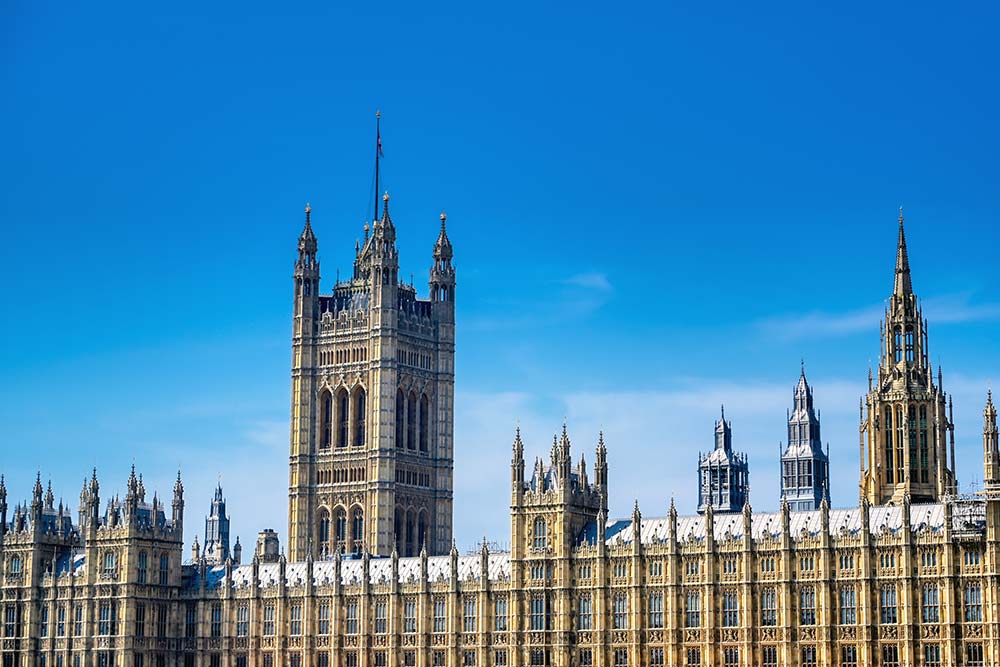
By contrast, the UK constitution has traditionally been characterised by a “fusion of powers,” particularly between the executive and the legislature. The Prime Minister and their cabinet (the executive) are drawn from and sit within Parliament (the legislature), usually commanding a majority in the House of Commons. On a superficial reading, this would seem to violate Madison’s principle and create the very accumulation of powers he warned against. However, the UK system avoids tyranny through a different set of constraints, including the role of the official opposition, parliamentary scrutiny committees, the check of the upper house, a free press, and the development of an independent judiciary. The Constitutional Reform Act 2005, for example, represented a significant move towards a clearer separation of powers by creating a new, independent Supreme Court and reforming the role of the Lord Chancellor, who previously embodied a fusion of all three powers. This reform demonstrates that even in systems not built on a strict separation model, the danger of concentrated power identified by Madison remains a central constitutional concern.
In conclusion, James Madison’s statement that the accumulation of all government powers in the same hands constitutes the definition of tyranny is a direct and accurate reflection of the core principles underpinning the separation of powers doctrine. This idea was not novel but was the culmination of a rich theoretical tradition, most clearly articulated by Locke and Montesquieu, who sought to design a system of government that could prevent the arbitrary exercise of power and thus preserve the liberty of the individual. While different nations have implemented this principle in various ways, from the American system of checks and balances to the more fused model of the UK, the fundamental goal remains the same. The enduring relevance of Madison’s warning lies in its simple but profound truth: that for liberty to thrive, power must be divided.
References
Barnett, H. (2017) *Constitutional & Administrative Law*. 12th edn. Routledge.
*Constitutional Reform Act 2005*, c. 4.
Locke, J. (1689) *Two Treatises of Government*.
Madison, J. (1788) ‘The Federalist No. 47’ in *The Federalist Papers*.
Montesquieu, C. de S. (1748) *The Spirit of the Laws*.